
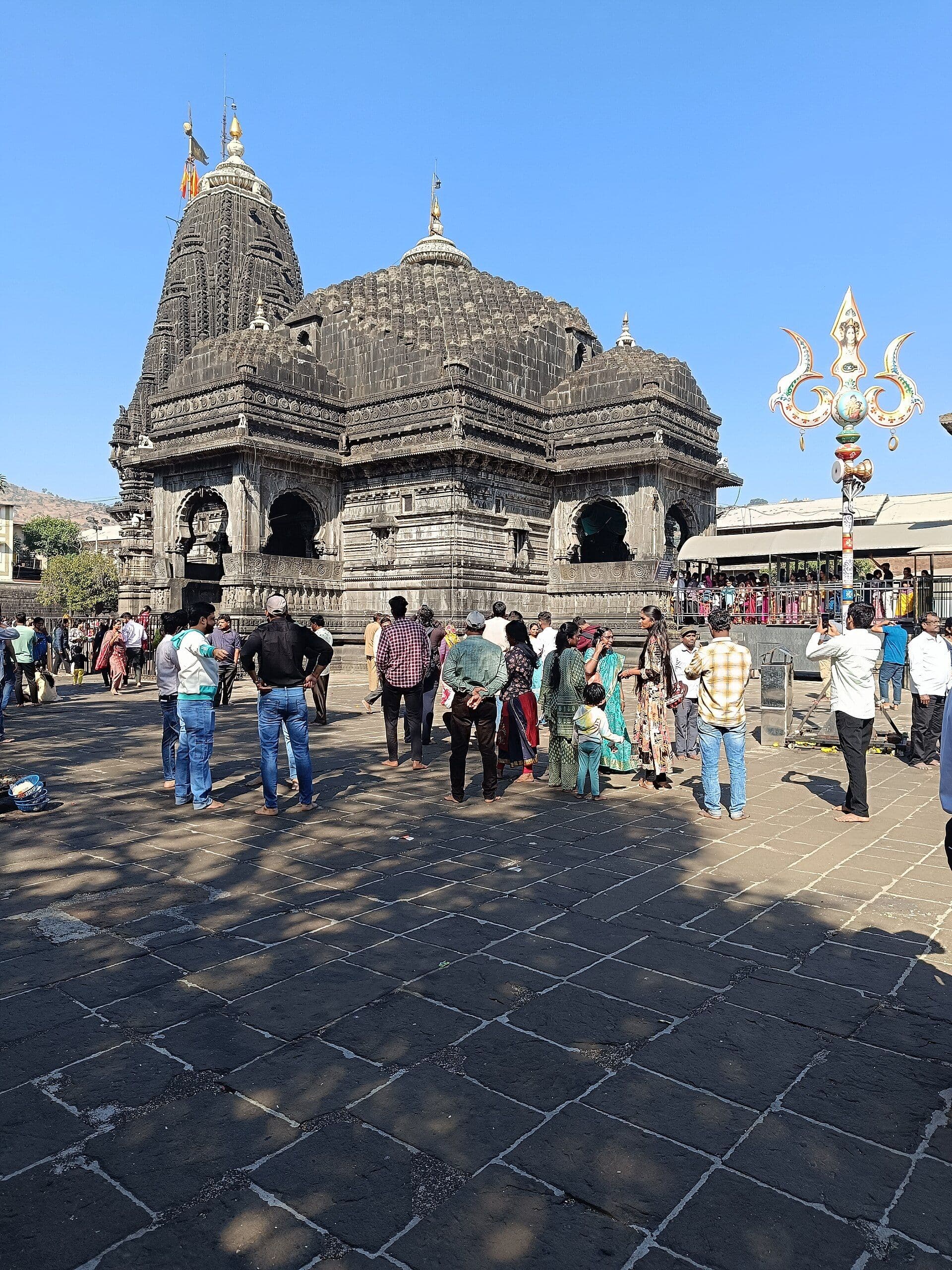
What is Simhastha Kumbh? Why Nashik Hosts One of India's Largest Gatherings
The Samudra Manthan legend, the four Kumbh cities, and what makes Nashik's Simhastha special.
Indimiles Editorial
We write approachable explainers on India's spiritual and cultural traditions for first-time travellers.
The word 'Simhastha' confuses a lot of first-time visitors. Why is the Nashik Kumbh called Simhastha, what does the Samudra Manthan legend have to do with a river in Maharashtra, and why does this particular gathering pull millions of pilgrims? Here is the story, told simply.
Simhastha Kumbh — quick answer
| 'Simhastha' means | Held when Jupiter (Guru) is in Simha (Leo) rashi |
|---|---|
| Applies to | Nashik–Trimbakeshwar Kumbh (and Ujjain's Kumbh) |
| Origin legend | Samudra Manthan — the churning of the ocean for amrit (nectar) |
| Nashik's river | The Godavari, India's second-longest river |
| Why Nashik | One of four places where drops of amrit are believed to have fallen |
The Samudra Manthan legend
According to Hindu tradition, the gods (devas) and demons (asuras) churned the cosmic ocean to obtain amrit, the nectar of immortality. When the pot (kumbh) of nectar emerged, a struggle followed, and during it drops of amrit are believed to have fallen at four places on earth. Those four places became the sites of the Kumbh Mela.
The four Kumbh cities
- Prayagraj (Uttar Pradesh) — at the Triveni Sangam of the Ganga, Yamuna and mythical Saraswati.
- Haridwar (Uttarakhand) — on the Ganga.
- Ujjain (Madhya Pradesh) — on the Shipra.
- Nashik–Trimbakeshwar (Maharashtra) — on the Godavari.
Why it's called 'Simhastha'
Each of the four Kumbhs is timed to specific planetary positions. The Nashik Kumbh (and Ujjain's) is held when Jupiter — Guru or Brihaspati — transits the zodiac sign of Leo, called Simha in Sanskrit. Because the whole event hinges on Jupiter being 'in Simha', the Nashik and Ujjain gatherings are known specifically as the Simhastha Kumbh. This is also why the mela lands roughly every 12 years — that is how long Jupiter takes to return to the same sign.
The role of Nashik and the Godavari
Nashik sits on the Godavari, which rises at Trimbakeshwar just west of the city. The area is steeped in the Ramayana: Panchavati, on the Godavari's banks in Nashik, is traditionally linked to the period Rama, Sita and Lakshmana spent in exile. Ramkund, the main bathing tank, and temples like Kalaram and Kapaleshwar anchor the city's spiritual life all year — and become the focus of the Kumbh.
Trimbakeshwar, about 28 km away, adds a second sacred pole to the mela. Its temple is one of the twelve Jyotirlingas of Shiva, and Kushavarta Kund there is considered the symbolic source of the Godavari. Many pilgrims combine both during the Kumbh.
How the four Kumbhs differ
The four Kumbh sites at a glance
| Prayagraj | Largest of the four; at the confluence of three rivers |
|---|---|
| Haridwar | On the Ganga in the Himalayan foothills |
| Ujjain | Simhastha, on the Shipra; timed to Jupiter in Leo |
| Nashik–Trimbakeshwar | Simhastha, on the Godavari; two linked centres |
FAQs
What does Simhastha mean?+
Simhastha refers to the Kumbh held when Jupiter (Guru) is transiting Simha, the Leo sign of the zodiac. The Nashik and Ujjain Kumbhs are the Simhastha Kumbhs.
Why is the Kumbh held in Nashik?+
Nashik, on the Godavari, is one of the four places where drops of amrit from the Samudra Manthan legend are believed to have fallen, making it one of the four Kumbh sites.
What is the connection between Nashik and Trimbakeshwar?+
Trimbakeshwar, about 28 km from Nashik, is the source of the Godavari and home to one of the twelve Jyotirlingas. The Nashik Simhastha is centred on both the Nashik ghats and Trimbakeshwar's Kushavarta Kund.
How often does the Simhastha Kumbh happen?+
Roughly every 12 years, matching Jupiter's cycle through the zodiac. The last Nashik Simhastha was in 2015.